

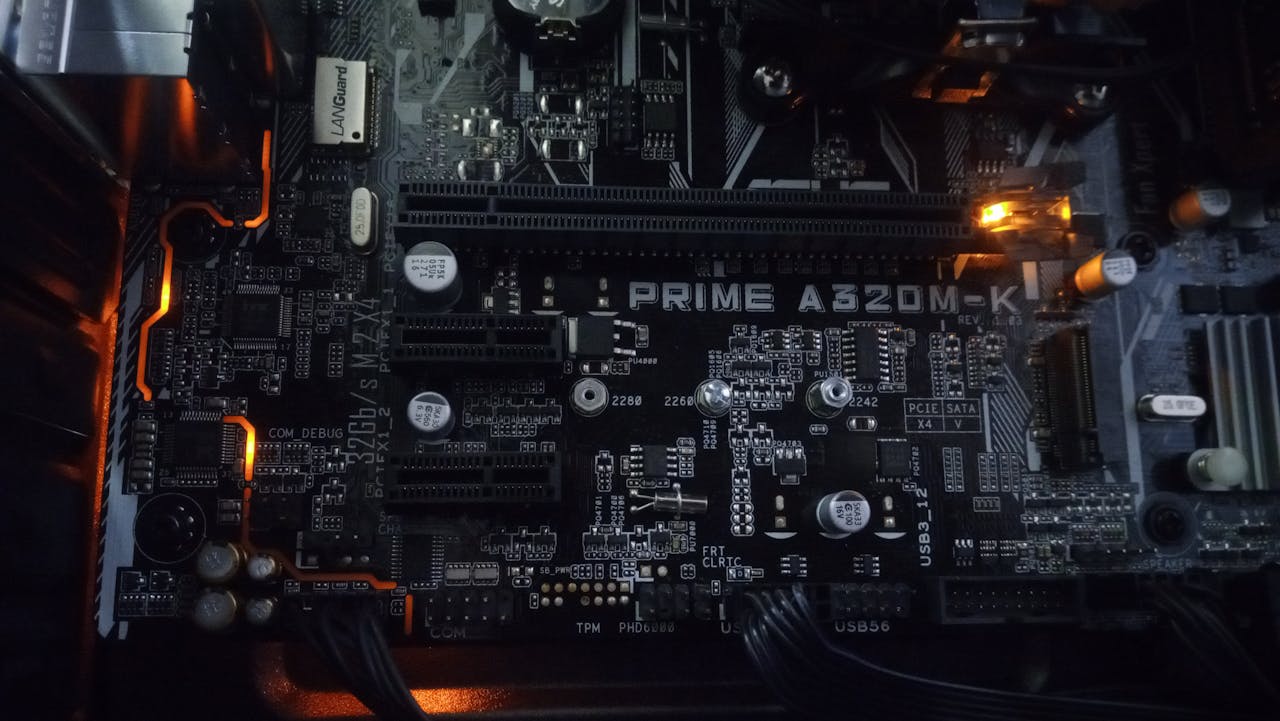
Modern audio systems rely heavily on digital signal processing to enhance clarity and improve how sound is perceived. From embedded hardware to advanced algorithms, signal processing plays a critical role in delivering intelligible and high-quality audio.
However, most conventional audio processing techniques focus primarily on mathematical manipulation of the signal — compression, equalization, filtering — without considering how the human auditory system actually perceives sound.
The Challenge of Digital Audio
Since the transition from analog to digital audio, most improvements have focused on increasing resolution: higher bit depths, higher sampling rates, and more complex processing chains.
But increasing the numerical resolution of a signal does not necessarily improve how it is perceived.
In practice, digital processing often introduces entropy, masking effects, and resolution corruption, which degrade the perceptual structure of sound. The human auditory system does not simply measure energy — it discriminates between acoustic objects and relationships inside the signal.
As a result, listeners may receive a technically “high-resolution” signal that is perceptually less clear.
A Perceptual Approach to Signal Processing
Advanced DSP systems can approach sound processing from a different perspective: optimizing the signal for perception rather than purely mathematical accuracy.
Technologies such as acusta DSP apply procedures designed to:
- Clean entropy and corruption introduced during digital processing
- Extend usable resolution to the optimal level for acoustic transduction
- Reduce masking effects between sound elements
- Improve discrimination between acoustic objects
These processes are designed to be auto-adaptive to the signal, meaning they do not rely on subjective parameters or manual tuning. Instead, they adapt dynamically to the structure of the audio itself.
Multiplying Intelligibility
One of the key goals of modern audio processing is improving intelligibility — the ability of a listener to clearly discriminate information inside a sound signal.
This is particularly critical in applications such as:
- telecommunications
- public address systems
- classrooms
- broadcast environments
- automotive communication systems
By reducing masking effects and optimizing the perceptual structure of the signal, intelligibility can be significantly increased — even in noisy environments or at lower listening levels.
In practical terms, this means clearer conversations, reduced listening fatigue, and more reliable understanding of spoken messages.
Beyond Clarity: Perceptual Efficiency
Another important aspect of perceptual DSP is the optimization of listening across different playback levels.
Traditional audio systems require higher acoustic energy to reveal detail. Perceptual signal processing can increase perceived detail and spatial information while using less acoustic power, improving both listening comfort and system efficiency.
The Future of Audio Processing
As audio moves increasingly into software-defined environments — smartphones, streaming platforms, smart devices, and connected vehicles — perceptually optimized DSP will likely become a core component of next-generation audio systems.
Rather than simply reproducing sound, modern signal processing is evolving toward something more ambitious:
enhancing how we perceive reality through sound.
Ultimately, the future of audio processing will not be defined only by higher resolution or more complex algorithms.
It will be defined by how well we align signal processing with the way humans actually perceive sound.
At ACUSTA, we develop perceptual DSP technologies designed to reduce signal entropy, preserve acoustic structures, and significantly improve intelligibility and listening clarity across different environments.
If you are working on next-generation audio systems, communication technologies, or immersive sound applications, we would be happy to exchange ideas.